4 min
4 minThis blog was written by Kari - De Groene Mama - in collaboration with VitaminFit. In this blog, Kari explains why she chooses a magnesium supplement.
I take magnesium every night before I go to sleep. Not only does it help me sleep better, it also helps me exercise without muscle pain. In this blog, I delve into magnesium: what does it actually do for your body? Why do you need it? And how can it help you? I also share some of my other tips for sleeping better and getting the most out of your workouts, because a healthy lifestyle doesn't begin and end with supplements. But they do support it in important ways!
What is magnesium?
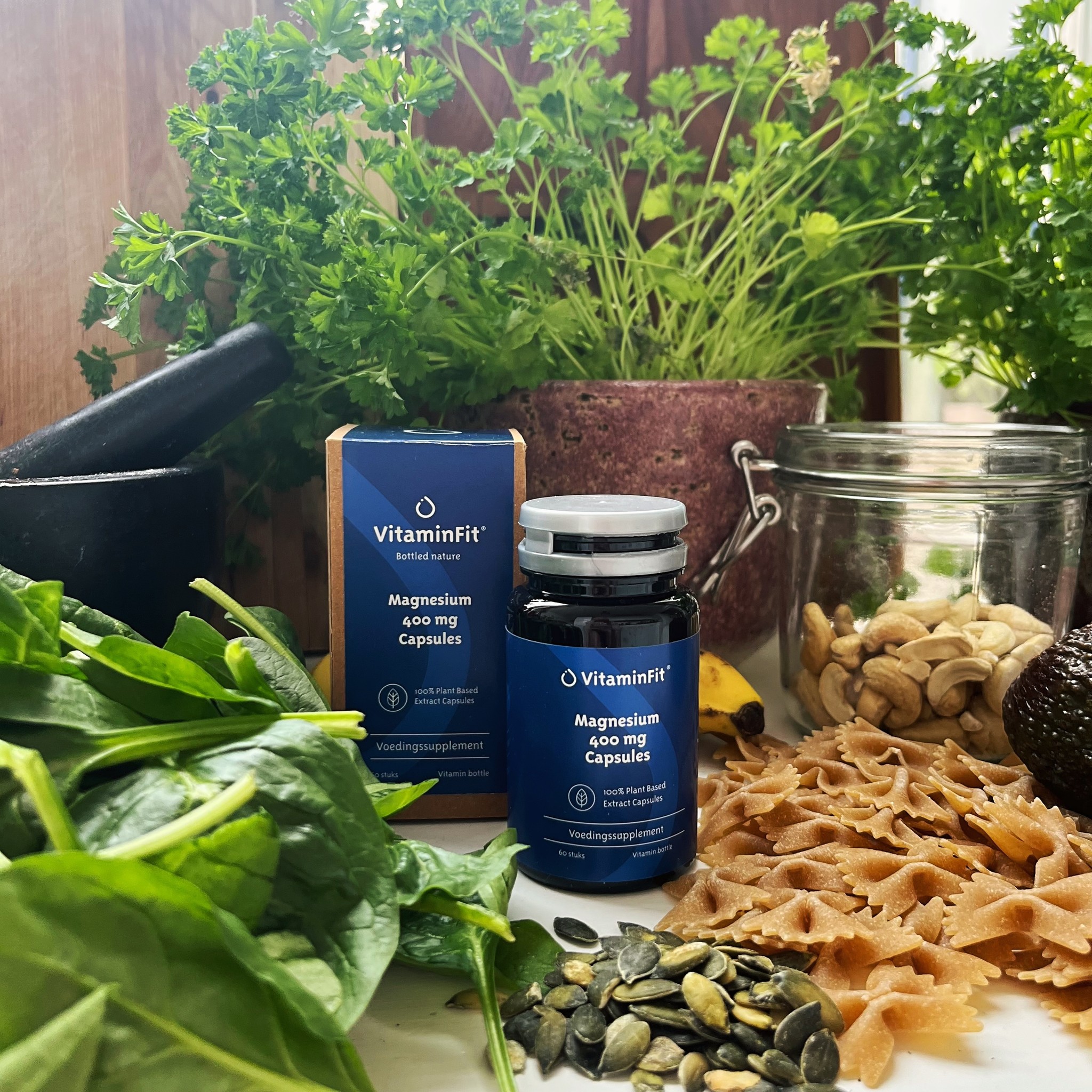
Magnesium is a mineral. Your body cannot produce this mineral itself. You depend on food for this. Plant sources of magnesium include nuts, seeds, wholemeal products, leafy vegetables such as spinach, cocoa and seaweed. This mineral ensures strong and supple muscles and the proper functioning of your nervous system. It also plays an important role in your energy metabolism: it combats fatigue and listlessness and stimulates the production of immune cells. In addition to your muscles, magnesium is also important for healthy teeth and bone structure.
What is magnesium good for?
In principle, you can get magnesium from plant-based foods. However, there may be reasons why your body does not absorb it properly or why you need some extra support. For me, the reason for starting to use magnesium was primarily sleep-related. I notice that I sleep better when I use it: I am more relaxed, worry less and fall asleep more quickly when I wake up at night. I use it in combination with valerian, a natural sedative that, like magnesium, reduces stress.
Other things I do to sleep better are: not watching television in the evening, but reading or listening to an audiobook, maintaining a healthy and restful sleeping environment with clean air and good ventilation, and sleeping under a weighted blanket.
Another reason why magnesium is good for you is if you do a lot of sport. I go bouldering three times a week. This is a climbing sport where you climb unsecured routes on a wall of about 4.5 metres. It's a sport that uses all your muscles, even ones you didn't know you had!
Bouldering makes you very strong quite quickly. It's great fun to do, but it can also be quite a strain on your muscles. Magnesium helps me to keep my muscles strong and healthy and to remain flexible, because flexibility is also very useful when bouldering. In addition to climbing, I also do yoga and (in the warmer months) running.
Other things I do for my muscles are taking a cold shower in the morning (about 1.5 minutes now), incorporating rest days to allow my muscles to recover, warming up properly (stretching and climbing) before I go bouldering, and applying Arnica if I feel any tension or pain.
Using magnesium supplements
If, after reading this blog, you suspect that magnesium could help you, take a look at the range offered by Vitaminfit. You can choose from magnesium citrate (400 mg), magnesium in combination with B6 (increases absorption) and magnesium in combination with zinc and selenium. I use magnesium citrate and take 1 capsule before bedtime with some water.
VitaminFit asked me to create this magnesium-rich recipe:

Vegan Buddha bowl recipe
A deliciously fresh summer recipe: this vegan Buddha bowl. For those long sunny summer evenings. Enjoy eating together in the garden or on the balcony. But also a tasty, colourful lunch, for when you have a little more time in the afternoon or have visitors.
What do you need for this vegan Buddha bowl?
- Fresh spinach
- Grated carrot
- Corn
- Cherry tomatoes
- A block of white tofu (tahoe)
- Chickpeas
- Sweet potato
- Vegan harissa
- Vegan tzatziki
- Black bean paste
- Fresh parsley
- Cajun spices
- Sunflower oil
- Flour
- Garlic powder
- Lemon
- Salt and pepper
- Pumpkin seeds
- Sesame seeds
How do you make this Buddha bowl?
If you are going to make the harissa and tzatziki yourself, you can do this while the sweet potato and tofu are cooking, or the night before, for example.
- Peel the sweet potato and cut it into cubes
- Put them in a pan with water and bring to the boil: cook the sweet potatoes until tender in 10-15 minutes
- Drain the tofu and pat dry with a clean cloth.
- Cut the tofu into cubes.
- Heat a generous amount of sunflower oil in a frying pan.
- Add the tofu cubes, along with 2 tablespoons of flour, 1 teaspoon of garlic powder, and salt and pepper.
- Fry for 15 minutes until crispy.
- Drain the chickpeas and rinse them. Then fry them in sunflower oil, with a good teaspoon of black bean paste, until crispy.
- Drain the sweet potato and fry it for another 10 minutes with a tablespoon of Cajun spices in a frying pan with sunflower oil.
Next, it's time to assemble the bowl.
- Start with a layer of spinach.
- Arrange the colourful ingredients in “pizza slices” on top, until the spinach is completely covered
- Then add a generous tablespoon of harissa and tzatziki
- Sprinkle some sesame seeds over the tofu and pumpkin seeds over the cherry tomatoes
- Place a lemon wedge in the vegan Buddha bowl: you can squeeze this over your bowl before eating
- Finally, add a little fresh parsley in the middle and you're done!