6 min
6 minIn recent years, there has been increasing research into the importance of vitamin K for your health, and with good reason! This vitamin plays a crucial role in your body, from promoting healthy bones to supporting your blood vessels. In this article, we discover why vitamin K is so important and how you can ensure you get enough of this vitamin.
In this article, you will learn
- What vitamin K is and why it is important
- The different forms of vitamin K
- Where to find vitamin K in your diet
- The consequences of a vitamin K deficiency or excess
- Whether you may need extra vitamin K

What is vitamin K?
Vitamin K is a fat-soluble vitamin that is essential for blood clotting and for the activation of bone and vascular protective proteins. It ensures that your blood stops flowing when you have a wound, but also prevents your blood from clotting too quickly, which can lead to blood clots.
Forms of vitamin K
Vitamin K consists of two naturally occurring variants and one synthetic form:
- Vitamin K1 (phylloquinone): This form is found in green leafy vegetables and other plant-based foods.
- Vitamin K2 (menaquinone): This form is mainly found in animal products such as cheese and eggs. The body can also produce Vitamin K2 itself, but usually in limited quantities. Vitamin K2 comes in many forms. The most easily absorbed form is menaquinone-7 (MK-7) from natto.
Vitamins K1 and K2 can also be produced artificially in a laboratory. These are then referred to as synthetic vitamins K1 and K2.
Synthetic vitamins often have a different structure than vitamins K1 and K2 that occur naturally in food. This affects the way they are absorbed by the body.
What is vitamin K good for?
Vitamin K is especially important for blood clotting, but also for the production of several blood proteins.
It is also an important vitamin for various processes, namely:
- Plays a role in bone formation
- Contributes to the absorption of minerals/calcium in the bones/bone tissue
- Contributes to the maintenance of strong bones
- Is important for bone composition
- Strong antioxidant
- Blood clotting / blood vessels
Vitamin K in food
- Vitamin K1 is mainly found in green leafy vegetables. Vitamin K1 is also found in vegetable oils and in smaller quantities in fruit, dairy products and bread.
- Vitamin K2 is mainly found in cheese, eggs, liver and dairy products.
Discover which specific foods contain vitamin K.
Vitamin K surplus
As far as is known, there are no adverse effects of excessive intake of vitamin K from food or supplements. In practice, an excess of vitamin K does not occur. Therefore, there is no upper limit for vitamin K intake.
People who use blood thinners or anticoagulants must adhere to an upper limit of 100 micrograms of vitamin K. This is because vitamin K can reduce the effectiveness of anticoagulants.
Vitamin K deficiency
Newborns have a vitamin K deficiency. From day 8 to 3 months, babies need 150 mcg of vitamin K when breastfeeding. This is because babies' intestines do not yet contain the bacteria needed to produce vitamin K.
People who use medicines, including antibiotics, for long periods of time disrupt the functioning of the intestinal flora and thus the production of vitamin K in the large intestine. In addition, people with chronic diarrhoea and excessive alcohol consumption are also at risk of vitamin K deficiency.
You can recognise a vitamin K deficiency by the following symptoms:
- Poor blood clotting (sometimes followed by bruising)
- Spontaneous bleeding
- Osteoporosis
Recommended amount
The EFSA has not established a precise recommended daily allowance for vitamin K, but it has established an “adequate intake” (AI). This is an estimated amount that should be sufficient to meet requirements when there is not yet enough data to establish a precise daily requirement.
For vitamin K, an AI has only been established for vitamin K1 (phylloquinone):
- Vitamin K1: 1 microgram per kilogram of body weight per day, regardless of age or gender. The EFSA roughly translates this to the AI in the table below
- Babies from day 8 to 3 months of age need a daily vitamin K1 supplement of 150 mcg because they cannot produce it themselves or obtain it from breast milk or formula
No official upper limit has been set for vitamin K. This is because vitamin K is generally considered safe, even in higher doses, as the body can process excess amounts relatively well.
| Age group | AI | Upper limit |
| 8th day to 3 months | 150 mcg | - |
7-11 months | 10 mcg | - |
1-3 years | 12 mcg | - |
4-6 years | 20 mcg | - |
7-10 years | 30 mcg | - |
11-14 years | 45 mcg | - |
15-17 years | 65 mcg | - |
Adults | 70 mcg | - |
| Pregnant women, breastfeeding women | 70 mcg | - |
Source: (European Food Safety Authority (EFSA) (n.d.))
Need a vitamin K supplement?
Depending on how much vitamin K1 and vitamin K2 is consumed in the diet, a supplement may be necessary. This is the case, for example, with certain diseases, excessive alcohol consumption and the use of certain medications (antibiotics). Elderly people in particular benefit from sufficient vitamin K intake. This supports bone formation.
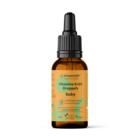
Breastfed babies need 150 micrograms of vitamin K drops for the first 12 weeks. Formula milk contains sufficient vitamin K. Does your baby consume less than 500 millilitres of formula milk per day? Then it is advisable to give extra vitamin K. Vitamin K plays an important role in newborns.
Vitamin K and pregnancy
This vitamin is safe to use if you are pregnant or planning to become pregnant. The medicine is not harmful to the child. During pregnancy, the dosage is 70 mcg per day. This applies to food and any supplements taken together.
Breastfeeding
Vitamin K is safe to use when breastfeeding. Small amounts of this vitamin end up in breast milk, but it is not harmful to the child.