3 min
3 minProteins are essential nutrients that are important for building, repairing and maintaining your body's proper functioning. It is not without reason that they are also referred to as the “building blocks” of the body. For vegetarians, vegans or people who want to eat less meat, it is especially important to be mindful of your protein intake. Fortunately, there are plenty of plant-based protein sources available that provide your body with everything it needs. In this blog, we list the best plant-based proteins for you.
In this article, you will read about
- The importance of protein for the body
- The best plant-based protein sources
- What to look out for when eating plant-based proteins
- How to add protein to your meals without meat
What are proteins and why are they important?
Proteins play an essential role in virtually all processes in the human body. They are made up of amino acids: the fundamental building blocks that our body needs for growth, repair and daily functioning. Proteins support the creation and maintenance of muscle mass, promote muscle recovery after physical exertion and are indispensable for a properly functioning immune system.
In addition, proteins contribute to the health of your skin, hair and nails, and help regulate hormones and enzymesthat are crucial for all kinds of bodily functions. They also give you a long-lasting feeling of satiety, which makes them important in a balanced diet.
Whether you are actively involved in sports, recovering from an injury or illness, or simply want to maintain your energy and resistance levels, adequate protein intake is very important. And the good news is: you don't necessarily have to eat animal products to achieve this. You can also provide your body with high-quality protein through a plant-based diet.
How much protein do you need every day?
The amount of protein you need each day depends on various factors, such as your age, gender, weight, lifestyle, and whether you are exercising or recovering from illness. For an average adult, the general guideline is 0.8 grams of protein per kilogram of body weight per day.
Are you active, do you exercise intensively or do you want to build muscle mass? Then your requirement is often higher – between 1.2 and 2 grams of protein per kilogram of body weight. Children, the elderly and pregnant women also have an increased protein requirement.
It is important to consider not only the quantity, but also the quality of the protein and how well it is absorbed. Plant-based proteins are excellent for this, provided you vary your intake.
The best plant-based protein sources at a glance
There are various plant-based foods that are rich in protein. Here are some of the most common:
Legumes
Beans, lentils, chickpeas and peas are excellent sources of protein. They are versatile and can be used in soups, stews, salads or as meat substitutes. When cooked, legumes contain approximately 7-9 grams of protein per 100 grams.
Tofu and tempeh
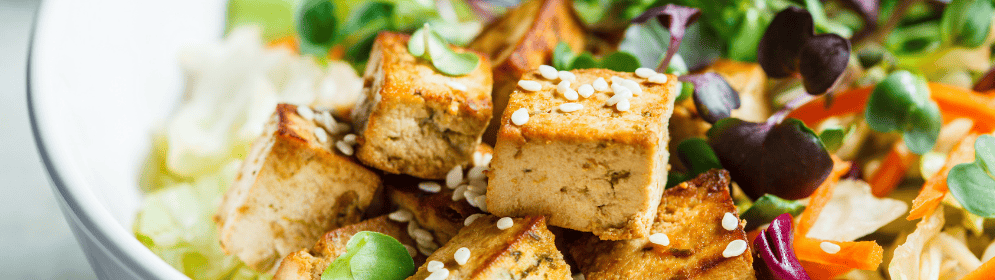
These soy products are not only high in protein, but also easily absorb flavours, making them ideal for a variety of dishes. They can be fried, grilled, stewed or added to stir-fries. Tofu contains about 8 grams of protein per 100 grams, while tempeh provides as much as 19 grams of protein per 100 grams.
Nuts and seeds
Almonds, peanuts, chia seeds, hemp seeds and pumpkin seeds are rich sources of protein. They can be eaten as snacks or added to yoghurt, breakfast cereals or smoothies. Almonds, for example, contain 21 grams of protein per 100 grams, while chia seeds provide approximately 17 grams of protein per 100 grams.
Quinoa
Quinoa is one of the few plant sources that provides a complete protein, meaning it contains all nine essential amino acids. It is a great alternative to rice and can be used in salads, as a side dish or even as a filling for peppers. Quinoa contains approximately 8 grams of protein per 100 grams of cooked product.
Green leafy vegetables
Vegetables such as spinach, kale and broccoli contain not only protein but also many other important nutrients. They are ideal for salads or green smoothies. Spinach, for example, contains 2-3 grams of protein per 100 grams raw, and broccoli contains 2.8 grams of protein per 100 grams.
Seitan
Seitan, made from wheat gluten, is an excellent source of protein and has a firm texture that makes it ideal for use in savoury dishes. Seitan contains no less than 25 grams of protein per 100 grams, making it one of the most protein-rich plant-based products.
Plant-based yoghurt and milk
There are many dairy-free options available that are enriched with protein, such as almond yoghurt and soya yoghurt. Soya yoghurt, for example, contains 4-6 grams of protein per 100 grams.
Why you should combine plant-based proteins
However, plant-based protein sources (except quinoa) often do not contain all the essential amino acids your body needs. Essential amino acids are the building blocks of proteins that the body cannot produce itself and must therefore be obtained through food.
Animal proteins, such as meat, fish and dairy, usually contain all nine essential amino acids in the right proportions, making them a complete source of protein. Plant proteins are often “incomplete proteins”: they lack one or more of these essential amino acids. But by combining different plant protein sources, you can still get all the amino acids you need.
Examples of good combinations:
- Legumes + grains: Think of lentils or beans combined with rice, quinoa or wholemeal bread.
- Nuts + seeds: For example, almonds with chia seeds or hemp seeds.
- Tofu + wholemeal products: Tofu combined with quinoa or wholemeal pasta.
These combinations ensure that your body receives all the essential amino acids, which optimises the absorption and utilisation of proteins.
Buddha Bowl: The perfect protein-rich meal
A Buddha bowl is a delicious, colourful and nutritious meal that combines all plant-based protein sources. Think tofu, quinoa, legumes such as chickpeas or lentils, and a variety of vegetables such as spinach, avocado and carrots. This combination not only provides a balanced amount of protein, but also provides fibre, healthy fats and important vitamins. Add a tasty dressing, such as one made from tahini or avocado, to complete this meal.
Conclusion
With these protein-rich plant sources, you can easily meet your daily protein requirements, even without animal products. Whether you are vegetarian, vegan or simply want to eat less meat, there are plenty of delicious and nutritious options to choose from. It is important to vary your protein sources and combine different plant-based foods. This ensures that you get all the essential amino acids and keep your diet varied!