3 min
3 minAre you vegan, but still want to get the right omega-3 fatty acids? There are vegan omega-3 options, but you're not sure if they're just as good. In this blog, we explain how you can get the right amount of omega-3, and most importantly, enough of it.
In this article, you will read
- What omega-3 fatty acids are and why they are important
- The difference between ALA, EPA and DHA
- Why vegans may have an omega-3 deficiency
- How to get omega-3 without eating fish
- The benefits of algae oil as a plant-based omega-3 supplement
ALA, EPA and DHA
Omega-3 fatty acids are polyunsaturated fatty acids. There are three types:
- Alpha-linolenic acid (ALA)
- Eicosapentaenoic acid (EPA)
- Docosahexaenoic acid (DHA).
These fatty acids play an important role in heart function and contribute to healthy brains and eyes. For (young) children, omega-3 is very important for the development of the brain and the physical health of the child.
Pregnant women are therefore advised to consume sufficient omega-3, both from food and from supplements. There is evidence that a severe deficiency of omega-3 is linked to cardiovascular disease.
The body cannot produce ALA itself and must obtain it entirely from food. The body does produce some EPA and DHA itself, but for the most part it also needs to obtain these from food. The body can convert ALA into DHA and EPA, but only to a limited extent.
ALA is mainly found in plant-based foods such as linseed oil, chia seeds and walnuts. To obtain EPA and DHA, it is best to eat oily fish such as salmon, mackerel, herring and sardines.
If you do not eat fish, you may develop a deficiency in omega-3 EPA and DHA. EPA and DHA can also be obtained to a lesser extent from meat and poultry, but if you are 100% vegan, you cannot obtain these two omega-3 fatty acids from your diet.
Vegan omega-3 versus omega-3 from fish oil
The only plant-based form of omega-3 is ALA. A plant-based alternative to EPA and DHA omega-3 is the use of algae.
Algae are fish-free: they are plant-like organisms. Fish eat algae that contain the omega-3 fatty acids EPA and DHA, which is how fish obtain their omega-3. By cultivating algae, their consumption has no impact on the ecosystem in our oceans.
By taking a supplement that contains algae oil, you can get all the right omega-3 fatty acids, even if you are vegan.
There is therefore no difference in quality between a vegan omega-3 supplement that contains algae oil and an omega-3 supplement based on fish oil. They contain the same EPA and DHA omega-3 fatty acids.
Depending on your preference, you can opt for a natural omega-3 supplement instead of a synthetic one. When it comes to vitamin absorption, it is almost always better to choose a natural supplement over a synthetic one.
There is often a difference in price between a vegan omega-3 and an omega-3 based on fish oil, because cultivating algae is a more expensive process than catching fish.
Sufficient intake of omega-3
First and foremost, it is important to get enough omega-3 fatty acids from your diet. Supplements are not a substitute for a healthy diet.
Because vegans cannot obtain omega-3 EPA and DHA from their diet, a supplement is an alternative for them. Others will need to ensure that they eat oily fish at least once a week to get enough EPA and DHA and consume enough products containing ALA. You need about 250-500 milligrams of omega-3 (EPA and DHA total) per day.
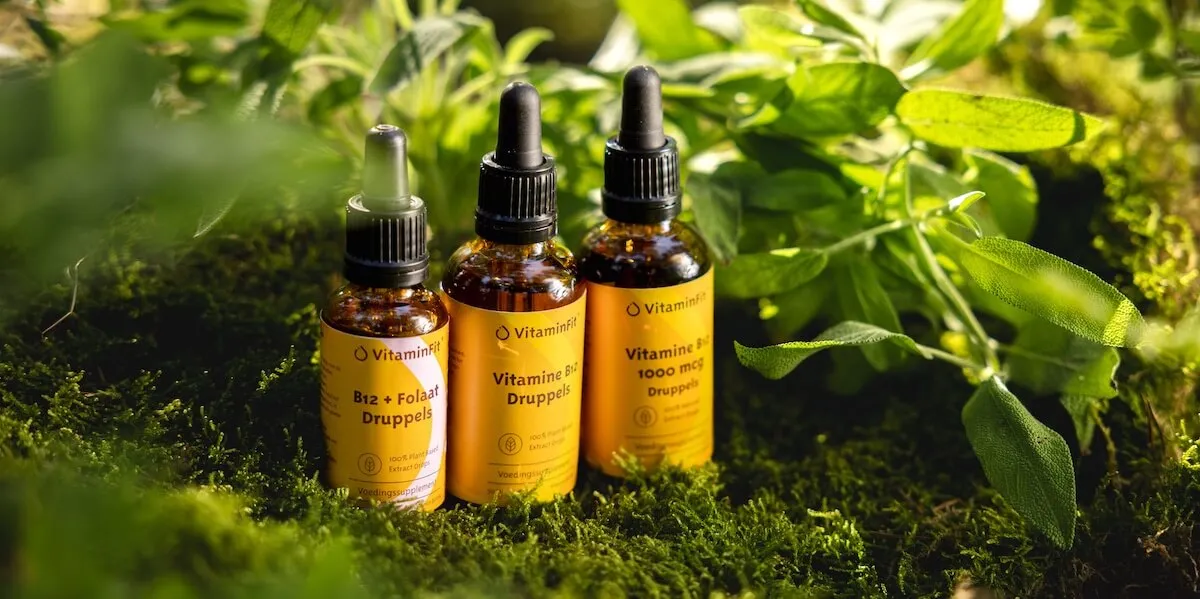
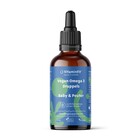
Our Vegan Omega 3 drops contain algae oil and are available for adults and children. The drops are easy to dose and also easy for children to use. Give them pure on a spoon or mix them into food.