3 Min
3 MinThe first bites are a special milestone in your baby's life. It is the moment when your little one tries solid food for the first time and begins their culinary journey of discovery. Exciting, isn't it? In this article, we tell you everything you need to know about how to make the transition to solid food as smooth as possible.
In this article, you will read:
- When you can start with solid food
- Which first bites you can try
- Tips for introducing new flavours
- How to recognise your baby's signs of satiety
- Why vitamins are important
- How to keep eating fun and positive
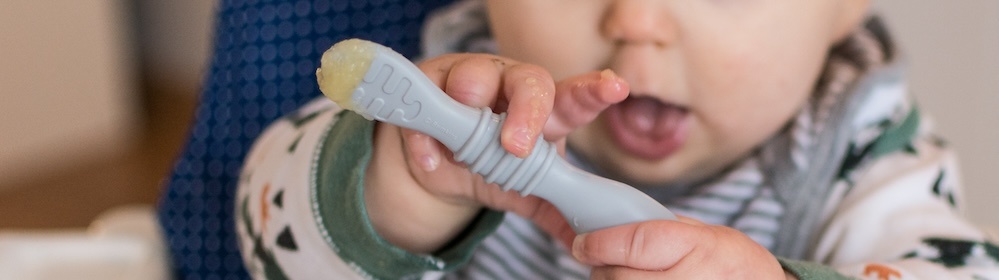
When to start with solid food
You can usually start introducing solid food between 4 and 6 months. But wait until your baby is really ready! Look for signs such as being able to hold their head up, showing interest in what you are eating, and a reduction in the tongue reflex (they no longer automatically push food out of their mouth).
The first bites
Once you start, it's helpful to begin with soft and mild flavours. Here are a few good options:
- Rice porridge: soft, easy to digest and easy to make by cooking rice and mashing it with a little breast milk or formula.
- Oatmeal: a nutritious option, also delicious when mixed with breast milk or formula for a creamy texture.
- Banana: easy to mash and has a mild flavour. Perfect as a first bite!
- Avocado: packed with healthy fats and with a soft texture, ideal for babies.
- Cooked vegetables: such as carrots, sweet potatoes or green beans. Cook them well and mash them into a smooth substance.
Introduce new flavours
As your baby gets used to solid food, it is important to gradually introduce new flavours and textures. Studies show that babies who are exposed to different types of fruit and vegetables at an early age are more open to trying new foods later on!
Here are some tips:
- One new ingredient at a time: when introducing a new ingredient, do so one at a time so that you can identify any allergic reactions.
- Vary the fruits and vegetables: offer different types of fruits and vegetables to stimulate your baby's taste buds. Think of broccoli, sweet potatoes, pears and plums.
- Gradually increase texture: as your baby grows, you can gradually change the texture of the food from pureed to mashed or cut into small pieces.
- Provide healthy fats: add foods that are rich in healthy fats, such as avocado and pureed seeds.
Signs of satiety
It is important to recognise the signs of satiety in your baby. Babies have small stomachs and indicate when they have had enough by turning their head away, closing their mouth or showing less enthusiasm for food. Do not force your baby to eat more than they want.
Adding vitamins
In our Vitamin Guide for Babies, you can read that in addition to their diet, your baby may sometimes need some extra vitamins, such as vitamin D. Our drops make it easy to add vitamins to your baby's food!
Make it a positive experience
Introducing solid foods to your baby is not only an opportunity to meet their physical needs, but also to create a positive eating experience. Talk to your baby while they are eating, make eye contact and smile. Let them get used to the cosy atmosphere around the dining table.
And most importantly: be kind! Make sure you don't force-feed your baby. This will cause them to develop a negative association with food.
Conclusion
Your baby's first bites are not only an important step for their growth and development, but also a fun and educational adventure! By starting slowly, choosing the right foods and paying close attention to your baby's signals, you will help them to become familiar with food in a healthy and positive way. Don't forget to make it fun and don't put any pressure on them. Eating should remain an enjoyable experience!