5 min
5 minTurmeric: we all know it as the spice used in Indian curries. But turmeric is much more than just a tasty seasoning. It also has various health benefits. That is, if you use turmeric that contains pure curcumin. Read on to find out how this works and what the health benefits of curcumin are.
In this article, you will read about:
- The origin of turmeric
- What curcumin is and why it is important
- The health benefits of turmeric
- What to look for when buying turmeric supplements

Turmeric: the origins
Curcuma longa is the name of the plant from which turmeric is extracted from the root. To do this, the yellow root is ground. For this reason, turmeric is also known as “yellow root”. The nutrients in turmeric are called curcuminoids, the most important of which is curcumin. Good turmeric therefore always contains curcumin.
The turmeric plant is related to ginger and grows mainly in India. In India, turmeric was already being used in dishes hundreds of years ago, but also as a medicine: the curcumin in turmeric helped to heal small wounds, but it also helped with other ailments. Turmeric is therefore part of the Ayurvedic lifestyle, which has its roots in India. In India, turmeric was also known among the population as their “holy powder”.
This already reveals that there are more reasons to use turmeric than just its delicious taste in a dish. What you do need to bear in mind is that the turmeric you buy in a spice jar at the supermarket is not the same as the turmeric used for its medicinal properties. For medicinal purposes, turmeric must contain the active ingredient curcumin*, preferably around 3 to 4%, and be of good quality.
*Curcumin is almost always extracted. So don't be tempted by low-quality turmeric that claims to be 100% turmeric. The curcumin may still have been extracted.
But what are the health benefits of curcumin in turmeric?
#1 Turmeric has anti-inflammatory properties
What we just told you about the use of turmeric as a medicine is not an Indian myth. Studies show that turmeric with curcumin has anti-inflammatory properties and can combat small, chronic inflammations (Aggarwal & Harikumar, 2009). What kind of inflammation are we talking about here? Chronic inflammation is a problem that causes damage to healthy cells in the body. This is because your immune system is constantly activated and becomes exhausted, preventing it from properly protecting the healthy cells in your body.
Chronic inflammation is caused by, among other things:
- Unhealthy diet;
- Vitamin D deficiency;
- Smoking;
- Stress
Of course, turmeric alone cannot prevent you from developing chronic inflammation. A healthy lifestyle without smoking, with good relaxation and a healthy and varied diet is crucial.
#2 Turmeric supports digestion
A very pleasant effect of turmeric with curcumin is that it helps to digest food better. Not only does this feel better for your intestines, but it also ensures that your intestines can continue to do their job properly. Digestive problems are unpleasant for everyone and can also have consequences such as a lack of energy.
How do you know if your digestion is good? You can tell by your stool. Colour changes can indicate that something is wrong. Your stool should not be black, but it should not be colourless either. The texture also tells you something: if your stool is suddenly very hard and thick, you may not be drinking enough. If your stool is very slimy or you have diarrhoea, your intestines are irritated. In addition to turmeric, we share 3 other natural tips for digestive complaints.
Drinking enough water, avoiding sugars and using turmeric can support your digestion.
#3 Turmeric helps burn fat
Research also shows that turmeric with curcumin keeps your blood sugar level stable. Your blood sugar levels spike when you have just eaten something. This signals your pancreas to produce insulin, which causes fat to be stored in your body instead of being burned. If you maintain stable blood sugar levels, your body can continue to burn fat at a steady pace.
Turmeric with curcumin also stimulates the gallbladder, which in turn plays a role in the digestion of fats.
#4 Turmeric helps detoxify the liver
This is why turmeric with curcumin is used in detox treatments. As we just learned, turmeric stimulates the functioning of the gallbladder. The gallbladder is connected to the liver (and the upper part of the small intestine). And the liver is the most important organ if you want to detoxify your body. Turmeric helps the liver do its job properly.
Turmeric supplement
As you have just learned, turmeric spices from the supermarket are not the same as a turmeric supplement. To achieve the health benefits of turmeric, it must be of good quality and contain the active ingredient curcumin (an important curcuminoid).
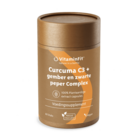
You will, of course, find this in our VitaminFit range. View the natural turmeric capsules here: natural dried turmeric from the Curcuma Longa plant with 15 mg of curcuminoids per capsule. The capsules themselves are plant-based, making them suitable for vegetarians and vegans.
Please be careful with turmeric if you are taking medication (e.g. blood thinners) or are pregnant. Turmeric can reduce the effectiveness of certain medications. Always consult your doctor in the above cases. (Jurenka, 2009).
Conclusion
Turmeric is much more than just a tasty spice. With the powerful active ingredient curcumin, it offers a natural way to support your health. From reducing inflammation to improving digestion and supporting fat burning, turmeric has it all. Make sure you choose a good quality supplement so that you really benefit from its advantages.