5 min
5 minAre you pregnant and want to take a multivitamin for your health and that of your unborn child? There are many products on the market, so you may find it difficult to choose the right one. In this blog, we explain which vitamins you should look out for and what is the best choice for a multivitamin during your pregnancy!
In this article, you will read
- Which vitamins are extra important during your pregnancy
- Why you should pay attention to vitamins A, B11 (folic acid) and D
- What artificial sweeteners in supplements mean
- Which multivitamin is a good choice for you
Pregnant - What should I look for in a multivitamin?
There are two vitamins that are recommended to take extra during your pregnancy: folic acid, or vitamin B11 or B9, and vitamin D. To get these vitamins, you don't necessarily need a multivitamin that contains all 13 vitamins (A, B1, B2, B3, B5, B6, B8, B11, B12, C, D, E and K), unless you have other vitamin requirements.
For example, you may need extra vitamin B12 because you are vegan. Your body may also benefit from extra vitamin Cbecause you have a weakened immune system.
If you choose to take a multivitamin during your pregnancy, pay attention to the presence and amount of vitamins A, B11 and D.
Vitamin A
Some people will still say that it is better not to take a supplement containing vitamin A when you are pregnant, and therefore also no multivitamins. In pregnant women, too much vitamin A increases the risk of congenital abnormalities in the baby. However, those who are well informed know that a supplement containing vitamin A in the form of beta-carotene is perfectly fine. Beta-carotene is converted by our body into vitamin A, but only when and in the amount that the body needs it. (Thorne-Lyman & Fawzi, 2012)
Pregnant women should consume no more than 800 mg of vitamin A per day. However, too little vitamin A can also lead to problems: reduced immunity, skin problems and poor dental health. So you do need vitamin A. If you take a multivitamin specifically for pregnant women as a precaution, you can be sure that your multivitamin does not contain too much vitamin A. If you want a multivitamin that only contains beta-carotene, then thebest choice is a 100% plant-based multivitamin.
Vitamin B11/B9 or folic acid
When you are pregnant, your body does not get enough folic acid from food. That is why it is recommended that you take 400 micrograms of folic acid (e.g. folic acid drops) every day during your pregnancy until the first 10 weeks. This reduces the risk of spina bifida, cleft lip and cleft palate in your unborn child (Seyoum, 2024). So check the label of the multivitamin you want to buy to make sure it contains enough folic acid.
Vitamin D
During your pregnancy, it is recommended that you take 10 micrograms of vitamin D daily in the form of a supplement. Vitamin D ensures the absorption of calcium from your diet and thus the development and maintenance of strong bones. This is especially important for you and your baby during pregnancy. Not all multivitamins contain sufficient vitamin D. So pay attention to this when making your choice, so that you can take a separate vitamin D supplement if necessary (Pérez-López & Chedraui, 2020).
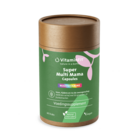
VitaminFit's Multi Mama
Our Multivitamin Mama Capsules have been specially developed and tailored for women who want to conceive, during pregnancy and while breastfeeding. With the right dose of folate, 100% plant-based!