3 Min
3 MinGrowing children need a generous amount of vitamins and minerals every day to stay healthy and full of energy. Their bodies are developing rapidly, and they are discovering the world as they run from one play adventure to the next. To support all that growth and activity, they really need a varied diet with vegetables, fruit, seeds, nuts and other nutritious foods. But, as we all know, most children prefer biscuits and sweets to those healthy options!
In this blog, you can read exactly what children need in terms of vitamins and minerals every day. We also share useful tips on how to provide even the pickiest eaters with the right nutrients in a fun way!
In this article, you will learn
- Why healthy eating can sometimes be difficult for children
- How repeatedly offering food can help
- Which vitamins are important, and why supplements can sometimes be useful
- An overview of the vitamins and minerals your child needs every day

Healthy eating for your child: a challenge!
Healthy eating can be quite a challenge, especially if your little one prefers biscuits and sweets and ignores vegetables. You are not the only parent who is concerned about this eating pattern. Fortunately, there is a way to help your child get used to new flavours: by offering food repeatedly.
If you serve your child carrots or peppers several times, for example, you increase the chance that they will get used to them. So even if your little one still pulls a face at Brussels sprouts, don't give up hope – with patience, tastes can change! (Spil et al., 2019). Read more tips for parents of fussy eaters here.
In addition to the nutrients in your child's food, extra vitamins are sometimes necessary. Supplements can also be a valuable addition.
Extra vitamins
- Vitamin D: children with darker skin tones or children who do not spend much time outdoors are advised to take a daily supplement of 10 mcg of vitamin D.
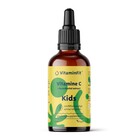
- Extra vitamins: it is often the case that your toddler or child does not get enough vitamins, for example due to difficulties with eating. That is why it is beneficial to offer your child something extra to prevent nutritional deficiencies. Think of vitamin C and/or a multivitamin.
Recommended daily amount of vitamins
Curious about what your child needs exactly? The table below shows your child's daily vitamin requirements:
Vitamin | 4 & 5 years | 6 - 8 years |
A | 350 mcg (retinol) | 400 mcg (retinol) |
B1 | 0,5 mg | 0,5 mg |
B2 | 0,7 mg | 0,7 mg |
B3 | 7 mg (nicotinic acid) | 7 mg (nicotinic acid) |
B5 | 3 mg | 3 mg |
B6 | 0,7 mg | 0,7 mg |
B8 | 25 mcg | 25 mcg |
B11 - folic acid | 150 mcg | 150 mcg |
B12 | 1,3 mcg | 1,3 mcg |
C | 30 mg | 40 mg |
D | 10 mcg* | 10 mcg* |
E | 5 mg (alpha-tocopherol) | 5 mg (alpha-tocopherol) |
K | 55 mcg | 55 mcg |
* For children with a darker skin tone and children who spend less than 15 minutes a day outdoors, the recommendation is to take a daily supplement of 10 mcg.
Recommended daily intake of minerals
The following minerals are also important for your child:
Mineral | 4 & 5 years | 6 - 8 years |
Calcium | 700 mg | 700 mg |
Magnesium | 120 mg | 200 mg |
| Potassium | 1800 mg | 1800 mg |
| Phosphorus | 470 mg | 470 mg |
Iron | 8 mg | 8 mg |
Zinc | 6 mg | 6 mg |
Copper | 0,4 mg | 0,4 mg |
Iodine | 90 mcg | 90 mcg |
Selenium | 25 mcg | 25 mcg |
Chromium | 15 mcg | 15 mcg |
Manganese | 1 mg | 1 mg |
Fluoride | 0,9 - 1,0 mg* | 1,4 - 1,5 mg** |
| Molybdenum | 15 mcg | 20 mcg |
* 4-6 year olds: 0.9 mg for girls and 1.0 mg for boys
** 7-10 year olds: 1.4 mg for girls and 1.5 mg for boys
Conclusion
Encouraging your child to adopt a healthy diet is often not easy, but it is important. By patiently offering different flavours, you give your child the opportunity to get used to healthy food. If this is not enough, certain vitamin supplements can help to replenish deficiencies. This is a simple way to support your child's healthy growth and development!