6 Min
6 MinAre you curious about a mineral that you may not think about every day, but which is essential for your health? Meet iodine! This small but powerful trace element plays a major role in your body, from supporting your metabolism to keeping your skin healthy. Did you know that iodine is mainly found in seafood and that even a special type of seaweed, kelp, is full of this important nutrient? Read on to find out more!
In this article, you will learn
- What is iodine and why is it important?
- Why is kelp so special?
- Where is iodine found and how do you get it?
- How do you recognise an iodine deficiency?
- What happens if you consume too much iodine?
- When is an iodine supplement necessary?

What is iodine and what is it good for?
Iodine is an important trace element that your body needs to produce thyroid hormones. These hormones ensure that your body grows and develops properly and that your metabolism remains balanced.
Iodine also helps the nervous system,memory,concentration and normal learning ability to function properly. In addition, it activates the body's natural energy, making you feel energetic. It also aids children's growth and is important for maintaining healthy skin.
The magic of kelp
Kelp is a fast-growing brown algae and one of the largest and most common seaweeds. There are 30 different known species, which are mainly found in colder seas. Underwater, these algae can even grow into veritable forests, with some species reaching a length of 50 metres. These enormous algae provide protection for many aquatic animals and also have many health benefits for humans.
Kelp contains vitamins and more than 20 different minerals, including iodine. It is a powerful natural source of iodine, making it ideal for vegetarians and vegans. Especially since iodine is mainly found in seafood, fish and iodised salt, kelp is an ideal supplement for people who consume little or no animal products.
The popularity of sea vegetables, such as spirulina and chlorella, is therefore growing rapidly in the United Kingdom. Kelp belongs in that list because it is not only rich in iodine, but also contains numerous other nutrients. Whether you want to prevent iodine deficiency or simply reap the benefits of sea vegetables, kelp is an excellent choice for a healthy diet.
Iodine in food
Iodine is found in food, but unfortunately only in a few products. Fish (especially sea fish) contains iodine. It is also found in bread baked with baker's salt, table salt with added iodine, some meat products (such as liver sausage) and sea vegetables.
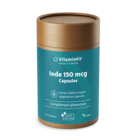
It is possible to obtain iodine naturally through seafood. This is why we offer iodine capsules made from kelp, which also contain (organic) spirulina and tulsi (holy basil). Spirulina is full of minerals and vitamins and strengthens the natural immune system. Tulsa is also rich in vitamins, minerals, chlorophyll and phytonutrients. It is also an antioxidant.
Iodine deficiency
An iodine deficiency can go unnoticed for a long time. This is because our thyroid gland can store iodine. If an iodine deficiency occurs, the thyroid gland slows down and swells (goitre or struma).
Consequences of iodine deficiency in pregnant women:Pregnant women are at higher risk of iodine deficiency. This can lead to developmental problems in the foetus, particularly in the brain. The mother may develop hypothyroidism. This means that the thyroid gland produces too few thyroid hormones, also known as an underactive thyroid.
Consequences of iodine deficiency in children: in children, iodine deficiency can lead to growth retardation, reduced learning ability and, in very extreme cases, even dwarfism.
Recognising a deficiency
There are several ways in which your body can show a deficiency of iodine:
- weight gain
- concentration problems
- feeling cold a lot
- constipation
- fatigue
- depression
- poor memory
- brittle hair and/or hair loss
- elevated cholesterol levels
- joint pain
In recent years, a deficiency has often been linked to bread. This is mainly due to eating less bread or the choice of bread type. In the past, baker's salt (iodised table salt) was added to bread as standard because it has a high iodine content. However, its use has no longer been mandatory for a number of years. Baker's salt is still used in most supermarket bread, but this is not the case everywhere. In fact, less than half of organic breads contain baker's salt; in gluten-free bread, the percentage is even lower.
A study (Hendriksen et al., 2017) conducted between 2006 and 2015 even showed that iodine intake among the Dutch population has fallen by a third! This is linked to people eating less bread and the reduced salt content in our bread.
Iodine surplus
There is a good reason why an upper limit has been set for iodine consumption. Long-term consumption of too much iodine can lead to an overactive thyroid gland, or hyperthyroidism. Common symptoms include palpitations, sweating, agitation and fatigue.
Recommended amount
Recommended daily amount for adults:
- Adults: 150 mcg
- Pregnant women: 200 mcg
- Breastfeeding: 200 mcg
Recommended daily amount for babies, toddlers and children:
- From 6-11 months: 50 mcg
- From 1-2 years: 70 mcg
- From 2-5 years: 90 mcg
- From 6-9 years: 120 mcg
- From 10-17 years: 150 mcg
In addition, acceptable daily upper limits have also been set for iodine:
- Children aged 1-3 years: 200 mcg
- Children aged 4-6 years: 250 mcg
- Children aged 7-10 years: 300 mcg
- Children aged 11-14 years: 450 mcg
- Children aged 15-17 years: 500 mcg
- Adults: 600 mcg
Need an iodine supplement?
Fortunately, we can get iodine from more than just bread. Foods such as seafood, fish and dairy products also contain iodine, but unfortunately these often do not fit into a vegetarian or vegan diet. Although many vegans and vegetarians consciously take B12 supplements, iodine is often overlooked. This is concerning, because people who do not eat animal products are at increased risk of iodine deficiency without immediately noticing it.
Pregnant women also need to be extra careful, as they are at greater risk of iodine deficiency, which can have serious consequences for both mother and child. So, do you recognise the symptoms of iodine deficiency, or are you in the risk group? Then it is wise to consider taking an iodine supplement.